|
|
|
|
Ask an Expert |
|
|
|
|
|
|
|
|
 |
|
|
|
| "Reach high, for stars lie hidden in your soul. Dream deep, for every dream precedes the goal." |
-Pamela Vaull Starr |
|
|
|
|
|
|
|
|
|
|
|
|
|
Psychological Aspects of Embryo Donation
|
|
|
|
|
|
 Miracles Waiting is honored to have Psychologist, Dr. Patricia P. Mahlstedt, as one of our expert advisors. She is a world-renowned psychologist who helps couples deal with the emotional issues of Assisted Reproductive Technologies. Dr. Mahlstedt completed her undergraduate degree at Southern Methodist University, her Masters Degree at the University of Texas in Austin, and her Doctorate at the University of Houston in the field of Counseling Psychology. During her undergraduate years, she attended the Goethe Institute and the University of Munich in Germany. She is currently in Private Practice in Houston, Texas. Miracles Waiting is honored to have Psychologist, Dr. Patricia P. Mahlstedt, as one of our expert advisors. She is a world-renowned psychologist who helps couples deal with the emotional issues of Assisted Reproductive Technologies. Dr. Mahlstedt completed her undergraduate degree at Southern Methodist University, her Masters Degree at the University of Texas in Austin, and her Doctorate at the University of Houston in the field of Counseling Psychology. During her undergraduate years, she attended the Goethe Institute and the University of Munich in Germany. She is currently in Private Practice in Houston, Texas.
Dr. Mahlstedt has professional affiliations with several Psychological Associations, has been a keynote speaker at various conferences, and has given presentation on the psychological impact of infertility and the emotional issues involved in treatment options throughout the United States, as well as Mexico and Canada. She is currently a member on the Medical Advisory Board of Infertility Network in Houston, and has published numerous articles on all aspects of infertility and donor issues. Dr. Mahlstedt brings over 25 years of experience, knowledge, and understanding in the field of infertility to our discussion.
Dr. Patricia P. Mahlstedt
4200 S. Shepherd, #250
Houston, TX 77098
713-526-8582
Dr. Patricia Mahlstedt has graciously provided the content for this page in collaboration with Miracles Waiting in the hope of helping our visitors have a better understanding of the pychological aspects of the Embryo Donation process. The Miracles Waiting team is truly grateful for her help.
Psychological Questions Regarding
Embryo Donation
1. What are the psychological issues that some recipients may have when undergoing treatment using donated embryos?
I imagine that entire books could be written responding to this question, as it involves so, so many areas of the infertility process – its emotional impact on the individual and couple; personal, financial, sexual, and spiritual concerns related to treatment decisions; and family-of-origin attitudes toward assisted reproductive technologies – as well as the known challenges and unknown possibilities involved in embryo donation itself.
Those of you who are choosing embryo donation are truly pioneers in this option and will be responding to this question with more authority than I have now for couples like you in twenty years. Right now, choosing to parent through embryo donation involves a leap of faith that you will be able to handle and assimilate with grace the multiple uncertainties that you might face. I recommend that you, as couples, learn to communicate very well about complex issues, surround yourself with others who are learning about similar issues, and find professional support that can encourage and support you in positive and wise ways.
Overall, before embarking on embryo donation I suggest that you grieve the many losses involved in your infertility and that you share with and forgive each other for the misunderstandings you experienced during the treatment period. I also recommend that you recognize that becoming a parent in any way involves a leap of faith, because regardless of where your children come from or how they were conceived, parenting is both the most rewarding and the most challenging life experience you will ever have. There are no easy paths for parents and children, and if natural conception guaranteed emotional satisfaction and success, just think of all the arrogant parents there would be in the world!
2. Are there some effective ways to get past these issues or ways to work through them?
Yes, thankfully there are! Some can be done alone, some with friends, and some with professional support. First, you must identify the personal wounds of your own journey and how they fit into your life right now. It is easier for most people to do that through discussions with other people who have experienced infertility, since listening to others articulate their feelings often broadens your awareness of your own as well. Sometimes marital relationships are strained to the point that having discussions alone about future alternatives is impossible, and here is where professional guidance is helpful.
In my 25 years of practice in this field, I have never seen an individual or a couple who was not able to work through emotional challenges when they wanted to and were committed to doing so in a disciplined way. In other words, both desire and action are necessary to identify and integrate the emotional issues of infertility as well as the future challenges of embryo donation into one’s life.
3. What types of things are typically discussed in a psychological evaluation that is required by clinics before doing a cycle with donated embryos?
Many clinics do not require psychological consultations for embryo donation in spite of ASRM guidelines to do so. However, in my limited experience in this area, a session with me would not be called an evaluation, but would be referred to as a psycho-educational consultation. It would involve a review of the infertility experience both medically and psychologically, a discussion of attitudes currently held about embryo donation including unknowns, fears, questions both about parenting and child development, and sources of support available to the recipients. If a known donation, it would involve a joint meeting with the donors in order to ascertain future plans for the families and children.
I would provide resources for support and education in this new area of family-building.
4. Are the recipients being evaluated on whether or not they will be good parents?
In my experience, true pass-fail evaluations only happen in Embryo Adoption, and these are usually handled by agencies who sponsor embryo adoptions.
The psychological consultation for embryo donation is similar to the one for any other type of gamete donation. It involves a discussion of the losses of infertility and the multiple leaps of faith involved in embryo donation. As I have said, I think questions about how parents or children might feel about lifetime issues; how “extended families” might interact; how parents and friends have responded; and when, with whom and how the “truth” about this life event will be shared are discussed in this consultation. In other words, the intention of the psychological consultation with recipients in embryo donation is more educational than psychological, though the backdrop for it is, of course, the human experience of all participants. Whether marriages are ready and able to communicate about complex emotional issues is probably the most important factor in choosing this means of creating a family. Along with that, I also believe that all kinds of faith help to integrate difficult processes into one’s life in positive ways.
An addendum to this question involves the role of the donor couple. I believe very strongly that they should be required to meet with a mental health professional who will encourage and help them to “dig deep” for all feelings involved in making their decision. The act of donating embryos represents both a loss and a gift, and all aspects of both need to be examined very carefully
5. What can psychological counseling offer donors and recipients?
HELP!!! Need I say more? There are just so many questions, concerns, and unknowns to handle, and learning ways to integrate those things into a positive family experience is not easy. Dealing with uncertainties is never easy, but when those uncertainties involve one’s children, they are even more difficult to manage. Parents always want guarantees that the choices they make for their children are the right ones, don’t you think?
And it is possible that initial doubt might rear its ugly head later when/if children have problems, marriages falter, or parent-child relationships are disappointing. You risk-takers must be careful about attributing painful, but common family struggles to your child’s means of conception. That would be analogous to blaming adoption for any adoptees’ problems or the adoption for any parent-child relationship. Without guidance from others who have already navigated around these traps, you will be more vulnerable to stepping into them yourselves!
6. How does a recipient deal emotionally with the fact that they will be raising a child that is not genetically related to them?
Briefly, a day at a time…in the same ways that people deal with parenting issues with children genetically related to them. Moreover, if people have the belief that a child “genetically related to them” will turn out a certain way or fulfill their own unmet needs, they might reason that a child conceived through embryo donation is less able to do that. In my experience, people have to live with the realities of who their children really are and what parenting experiences they will have with those real children all the time!
However, the loss of the genetic child never goes away completely. It is normal to yearn for the child who has your eyes, your mother’s grace, your father’s warmth, as well as characteristics that you value about yourself. Those are, however, the parents’ losses, and they must be attended to by the parents. A child is not a loss. In other words, parental feelings toward any child are the parents’ responsibility, and that is very different from “raising a child that is not genetically related to you.” In one, the focus is on the child; in the other, the focus is on the parents. Any child has strengths and limitations that you, as parents, will learn to appreciate and accept no matter how or where that child was conceived!
7. How does a donor deal emotionally with the fact that their donation could result in children that are biologically related to the children that are already born to them?
To be honest, I do not know. Embryos are not like children who are subsequently adopted, and that is the only framework I have for defining this challenge. Embryos were initially created to be the children of the donating parents. They were not transferred because a clinician or physician chose other embryos to be transferred to the recipients/now donors. Whether or not children will see the arbitrary nature of that decision as a positive or a negative, I do not know.
I think that this aspect of embryo donation – that the embryos were initially created by the donating couple for themselves and then not selected to be transferred by someone else – is what troubles some people. On the other hand, the alternative to donation is what many donor couples are trying to avoid.
So many things could influence a donor’s emotional resolution of that decision and the subsequent events. For example, what if something were to happen to their own children? What if the children subsequently conceived were “more like them” than their own children? What if the children conceived through the donation see the donors as their “real” parents? Of course, these things would not happen in an anonymous situation, but in a known donation, they are a risk.
Actually, I have rambled on and not answered your question. How donors will feel about potential children “out there” will depend entirely on how they cope with other uncertainties in their lives, their overall emotional maturity, and their willingness to seek professional help when daily thoughts go to “those other children” too often.
8. What are some common fears or apprehensions about using a donor, whether via sperm, egg, or embryo donation?
Fears concerning parenthood usually focus on unknowns and are also experienced by people who conceive naturally. They involve such questions as: How will I relate to my child? Will she love me? Will my parents accept our child? Concerns unique to gamete donation are Will my children see me as their “real” mother/father/parents? Will I be able to deal with criticism from family or friends? How will I handle “stupid comments” from people in general? How and when will I disclose the information about his/her conception with our child? Are we protected from the donor’s claiming our child in the future? What access to information in the future will be available?
I am sure there are many more, but these are the most common.
9. If a recipient is feeling uncomfortable with using a donor to help them achieve a pregnancy, are there ways to help them work through these feelings?
Yes! Counseling is very, very important in moving forward to using donor support for achieving a pregnancy. Several years ago, I wrote an article with Dorothy Greenfeld on assisted reproductive technology and the need for psychological support. It was published in Fertility and Sterility, and it identifies psychological issues and ways of dealing with them.
10. Why does the subject of whether or not to tell children about their genetic origins seem to be such an emotional or “hot” topic for many people?
Sometimes that amazes me, also. Conceiving through donor gametes is such a thoughtful, carefully-planned, intentional thing to do that the child’s story is very special, especially when parents are on the same page and have resolved the pain that their infertility caused them. (Incidentally, “resolving” pain does not mean that it goes away forever, only that you have found a place to put it in your life that creates peace most of the time…like any other major loss.) I imagine it is a hot topic because people who are ashamed or think it should be private for some other reason want to have that choice. So, encouraging people to do something that they are fearful of pushes buttons. Hiding a loss, however, does not make it go away, and there are many reminders like questions from a child’s physicians about his medical history, comments from others about who he looks or acts like.
My experience has been that people who plan to be honest with their children conceived through donor gametes do not think of disclosure as a hot topic. Only those who are uncertain or emphatic about it view it in emotional ways. At least, that is my experience.
11. What is your viewpoint on disclosure vs. nondisclosure to the children born from embryo donation?
My viewpoint is that it is in the child’s best interests to be told the truth about his means of conception. “Why not disclose?” has always been my response to this question. Several characteristics of secrets make them a bad idea in this situation. One is that they are often used to hide something bad, something that the secret holder feels bad about. It usually involves an unacceptable act or behavior on the part of the secret holder. In my opinion, embryo donation is not a bad thing and only hides a couples’ infertility and a child’s accurate history. Those truthful things are a part of a child’s history. If it is in any way painful or distressing for the child, then a parent must help her to understand those feelings and work them out.
A second characteristic of secrets is that they are not kept. Keeping a secret from someone you love is very difficult, and the more you love a child, the more difficult it will be to hide the truth. Not only that, but close relationships with extended family are compromised in some ways when such an important thing is kept from them. That is especially true when the relationships have been significant in a person’s life.
A third thing about secrets is that they are often exposed in very traumatic ways. I have seen this on many occasions in all sorts of situations. Because it may be a part of a child’s medical record forever, it is very likely that he will “discover” it at some point.
But most important in the use of donor eggs, sperm, or embryo, it should be something parents look forward to sharing with the person conceived in this way. It should feel like a positive story for all involved.
12. What is your viewpoint on disclosing to family or friends?
It is entirely up to the parents of the child. In general, I believe that it is a positive option for creating a family and that happy parents will want to share it! Keeping secrets is very difficult.
13. How can parents go about telling their children of their origins, and at what age should they be told?
In this issue, adoption and embryo donation have several things in common: the planning that precedes it, the lack of genetic connection to the children, and when to tell.
I have a donor conception paradigm that I give clients who are considering this option. Over it is the caption LOVE STORY. That symbolizes the lengthy journey that most couples or individuals go along to get to this point. It is the emotional and medical pain, the multiple sacrifices, the compromised relationships, the risks, and, finally, the leap of faith that is taken to conceive through gamete donation. Like I mentioned above, it is a thoughtful, loving decision, and parents are eagerly anticipating the arrival of a child.
Under the caption is a triangle. On one point is the donor; on the other two points are the parents, mom and dad. Because parents loved each other and wanted to be parents, they decided to have a baby. When the natural method did not work, they went to the doctor who helped them find a helper/donor. With his/her/their help, you, the child, was conceived.
I emphasize that the egg or sperm donor is not a parent but a helper. I do not know how you will want to refer to the embryo donor couple. I have read books in which the donors are referred to as the “birthparents,” but I personally am not comfortable with that. Even though the donor “created” the embryos, I still think of them as donors and the recipients as the parents.
Whatever words you use, most professionals believe that telling early, preschool, is better in that it becomes just another aspect of a child’s life. Once again, it is a positive story and one that the child will value in the same way the parents do. Of course, the story changes and takes on greater and different meaning as a child grows up.
14. How can parents provide information to their children about the unique way they were conceived without feeling uncomfortable or making their children feel strange or weird?
“Being uncomfortable” is something parents have to work through by dealing with the aspects of embryo donation that might contribute to those feelings. They can either do that alone as a couple, with other couples who have created families in the same way, by reading the multiple books that are available on the topic of gamete donation, through support groups, or with professional help. The children will only feel “weird” if their parents feel that way. Remember, kids conceived through egg donation in this country are 20 years old now. Young adults in their 20’s now do not, in general, think of egg and sperm donation as “a big deal.” Those concepts are explored on nighttime television and on daytime talk shows all the time. They have become an everyday topic for most young people.
As a result, your children will grow up in a generation that is even more familiar and comfortable with the assisted reproductive technologies and will probably know other kids who were conceived in similar ways. In other words, children conceived in today’s world will not hold the same feelings about most things that their parents do.
So, don’t project your discomfort on your kids, and they probably will not feel it!
15. We don’t want people to treat our children differently because of the way we chose to build our family. Is there an easy way to tell family and friends so that they aren’t judgmental about our decision?
The overall answer is that it depends upon your family and friends! It also depends upon how open you have been all along and how comfortable you are with your decision.
In general, however, I think that people who are close to you will mimic your attitudes about this decision. If you are happy about it, they probably will be, also.
Often we all forget that others do not know as much about all of the technological advancements in reproductive medicine and have only heard the “horror” stories on TV and Radio. Therefore, it is up to you, first of all, to educate them about the multiple options. Send them information about the “facts” of embryo donation as well as the process you went through to make the decision.
Then be willing to listen to their discomfort, because I do believe that many well-intentioned people will be uncomfortable with embryo donation. As I mentioned above, even the most informed people in this field are uncertain about the language to use when discussing donors, recipients, and siblings in the embryo donation triangle. For example, what do you call children who came from embryos created in one cycle by one couple but transferred to two different women? Are they siblings? The reason I mention this is that those situations will be the ones that friends and relatives will want to talk about. That is why your being comfortable with their discomfort is so important.
From experience, how your friends and family treat your children is something over which you have no control. However, I have a hard time imagining how grandparents will not love their children regardless of their means of conception? I imagine friends will be the same, but there may be a learning curve here that is similar to one parents of adoptees experience.
Honestly, I just do not know yet how others will respond to embryo donation since it is such a new option. However, I do know that being honest with significant others in your life; providing information via conversations, books, letters, emails, etc.; allowing them to learn and adjust to it something new to them; and dealing with your own feelings will enrich your relationships with everyone that matters. Anyone who cannot share your joy as parents of children conceived through embryo donation will probably not be an integral part of your life.
16. Since embryo donation is so new, how can we find the right professional to work with for counseling?
Professional organizations that are familiar with mental health professionals in the field are:
American Society for Reproductive Medicine (ASRM)
RESOLVE
American Infertility Association
Physicians in reproductive medicine
Friends and acquaintances who have worked with a counselor
|
|
|
Follow the links to other collaborative information provided by experts for the Miracles Waiting site in other areas related with Embryo Donation:
Family Formation Law
|
|
|
|
|
 |
|
|
 |
|
|
|
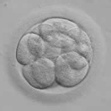
Nearly 400,000 embryos are stored in the United States,
88.2% are targeted for patient use, and
2.8% are available for research.
FERTILITY AND STERILITY |
|
|